Crawl Space Rodent Control Katy, TX |
Pier & Beam Rat Removal

If your home sits on a pier-and-beam foundation, the crawl space underneath is the easiest way for a rat to get inside. Katy’s clay soil shifts with every dry spell and every heavy rain, opening gaps at the foundation that Norway rats use to move in. Here’s what a real crawl space inspection covers, and why it matters more if you’re near Cane Island Branch, Willow Fork, or the Buffalo Bayou drainage system.

Norway Rats and Katy's Water-Heavy Landscape

Norway rats are ground burrowers, not climbers, and they need water close by. Katy sits right where Cane Island Branch and Willow Fork meet to form Buffalo Bayou, with Barker Reservoir and the wider Katy Prairie drainage system nearby. That much surface water, combined with heavy rain during hurricane season, keeps Norway rat populations active near ditches, retention ponds, and bayou edges close to residential lots.

Katy’s soil is thick expansive clay. It swells when wet and shrinks when dry, and that constant movement opens small gaps at the foundation sill and around pier footings every season. A gap that starts as a hairline crack after a dry summer can widen enough for a rat to pass through once fall rains soak the clay again. Homes within a few blocks of a drainage ditch, bayou tributary, or retention pond carry higher crawl space rodent pressure.
Foundation and Pier Gaps

Every inspection starts outside, checking the foundation perimeter and around each concrete or masonry pier for burrow holes or gnawed openings. Fresh dirt piled next to a smooth-edged hole is the clearest sign of an active Norway rat burrow working its way toward the crawl space.

Plumbing and Utility Lines

Norway rats gnaw through plastic water lines, PVC drain pipe, and low-hanging wiring that runs through the crawl space. A chewed line under a Katy home can leak for weeks unnoticed, soaking the wood framing and setting up mold in Houston’s already high humidity.

Vapor Barrier Condition

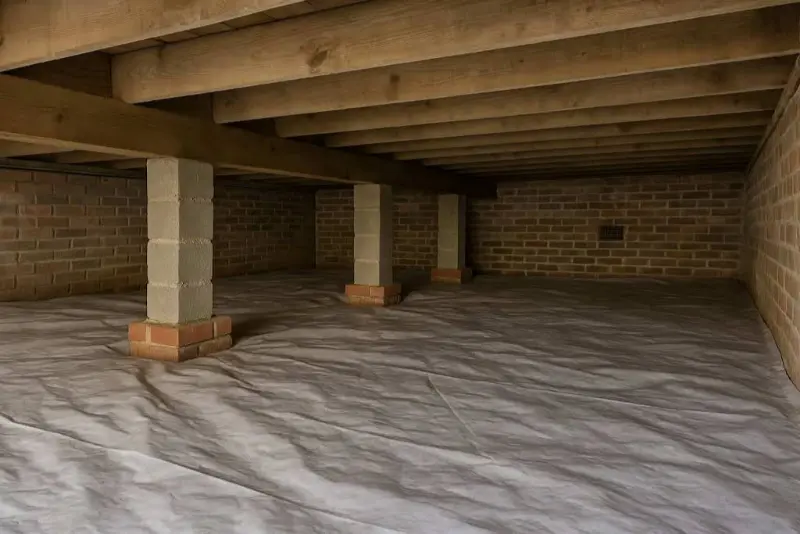
Most pier-and-beam crawl spaces have a plastic vapor barrier laid over the dirt to block ground moisture. Rats and mice tear through it moving across the crawl space floor. Once torn, ground moisture rises straight into the wood framing above, which is a bigger long-term problem than the rats themselves.

Droppings and Species Confirmation

Norway rat droppings run about ¾ inch long with blunt, rounded ends, clearly bigger than the thin, pointed droppings mice leave behind. Finding them scattered along the crawl space floor near pipe runs, rather than up near the attic, confirms Norway rat and points the exclusion work at the foundation, not the roofline.

Beam and Joist Damage

Wood beams and floor joists that sit close to damp soil are a gnawing target, especially where clay soil movement has already stressed the wood. Any beam damage found during inspection gets flagged separately, since it may need a foundation contractor, not just pest exclusion.

Moisture and Standing Water

Katy’s flat terrain and clay soil mean water drains slowly. A moisture check across the crawl space floor identifies standing water or damp zones that draw rats in and encourage mold, even before any rodent activity shows up.

Leptospirosis: The Real Risk in a Katy Crawl Space

Norway rats carry Leptospira bacteria in their urine. Unlike airborne risks, leptospirosis spreads through direct contact with contaminated soil or standing water, and the bacteria can survive in wet ground for weeks. A Katy crawl space with poor drainage, damp clay soil, and an active Norway rat population is exactly the kind of damp environment where that contact risk builds up.

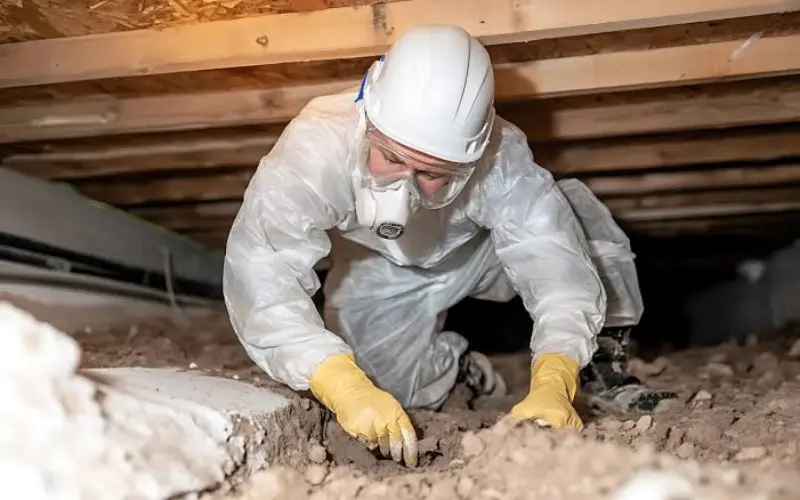
Anyone going under the house, whether for pest work, plumbing, or a DIY inspection, should treat a rat-active crawl space as a direct exposure point. Our technicians use nitrile gloves, respiratory protection, and full coveralls on every Katy crawl space job, especially after heavy rain when soil saturation is highest.

Crawl Space Exclusion, Built for Katy's Soil

Protect your Katy home from the ground up with our proven 4-phase crawl space exclusion process designed to keep rodents out permanently.

Inspection

Full perimeter check of the foundation, piers, vents, and crawl space interior, with a written report and photos the same day.

Trapping to Zero-Catch

No sealing begins until the crawl space is confirmed clear. Sealing over active rats traps them inside, leading to chewed beams and a dead-rodent smell later.

Sealing With Corrosion-Resistant Materials

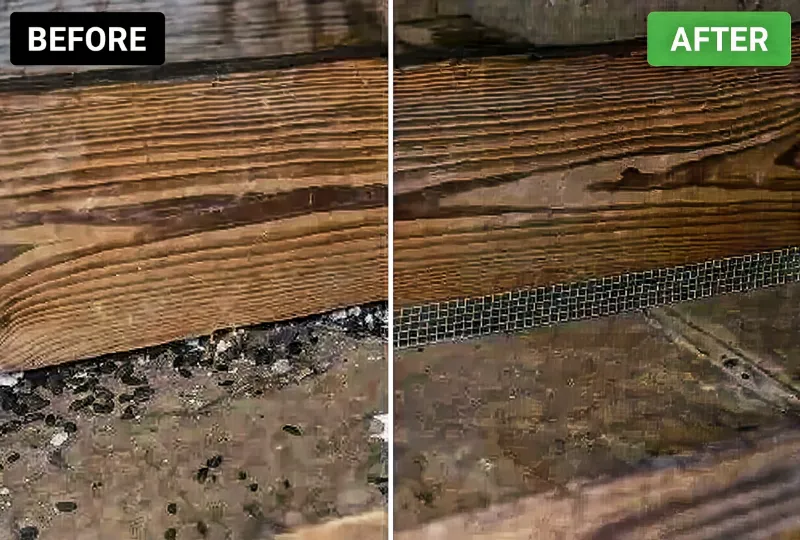
Foundation vents get stainless steel mesh instead of standard galvanized screen, which corrodes faster in Gulf Coast humidity. Sill gaps and pier penetrations are sealed with metal flashing and mesh, not foam, since foam alone can’t stop a rat’s gnawing.

Vapor Barrier Replacement and Enzyme Treatment

Torn vapor barrier sections are replaced with heavy polyethylene sheeting, and an enzyme deodorizer breaks down scent trails so the next rat doesn’t follow the same path back in.

Before & After Rodent Control in Katy, Real Homes, Real Results

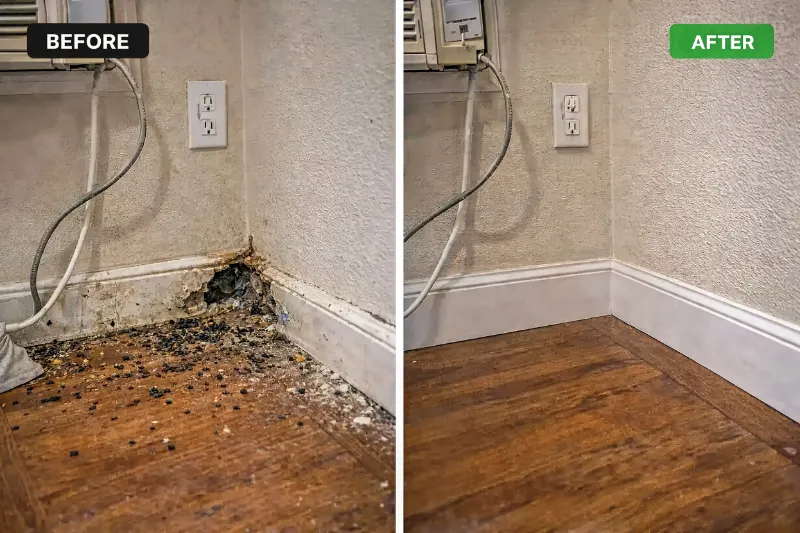
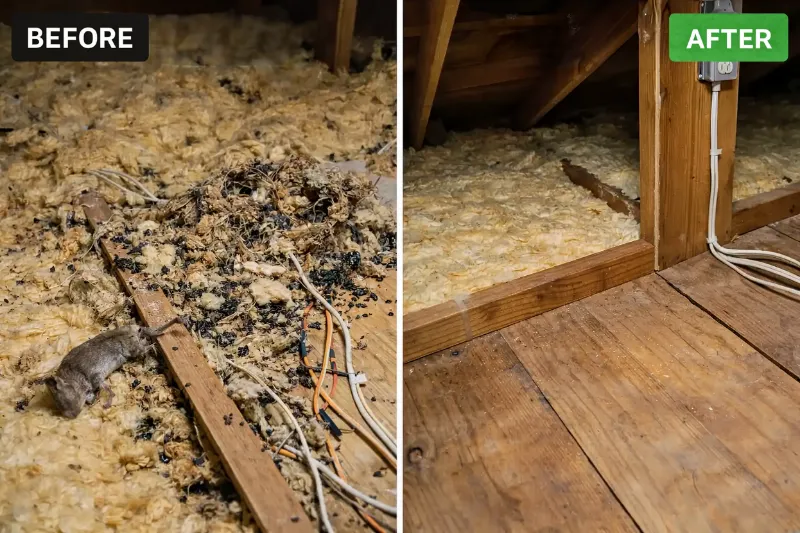
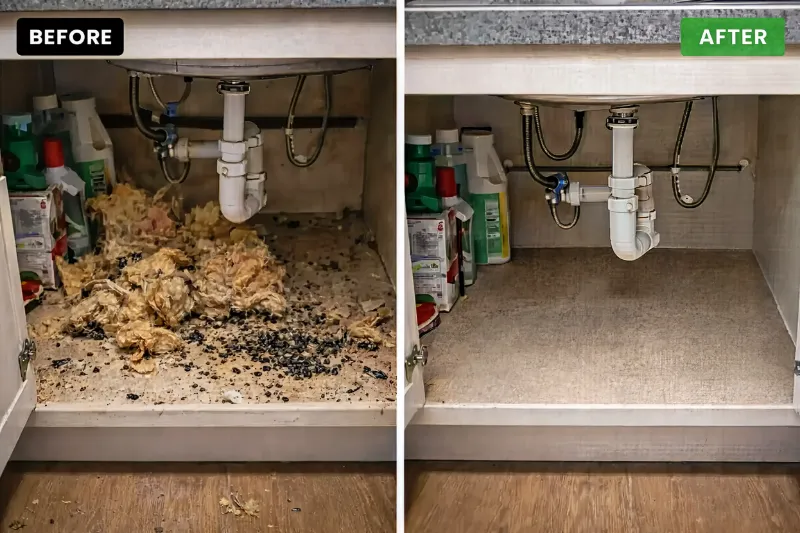
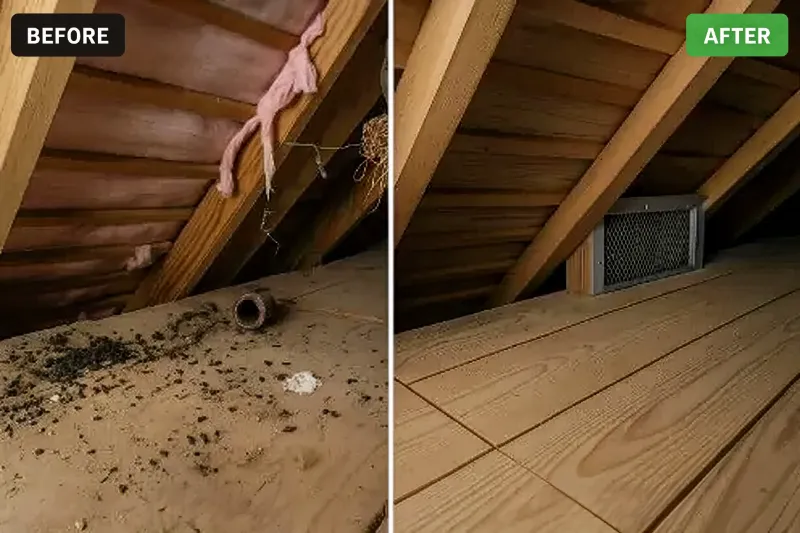
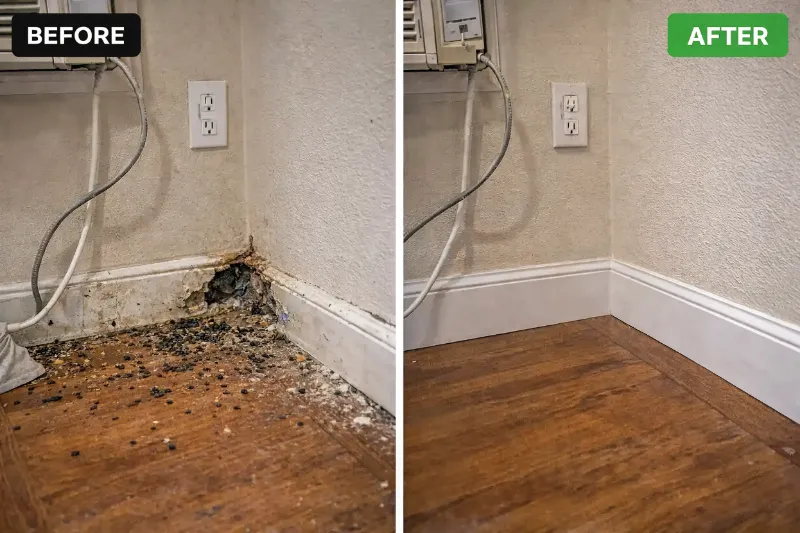
Every before-and-after photo below comes from real Katy homes where we removed rodents, sealed every entry point, and restored insulation damaged by nesting, droppings, and moisture from Katy’s heavy seasonal rainfall.

What Rat Removal Costs in Katy

No bait-and-switch. You see the ranges before we arrive.

ServiceStarting FromNotes
Inspection & Report$350Credited toward work
Trapping Program (7–10 days)$500Humane removal
Full Exclusion$200 – $4,000+Most Katy homes
Complex Exclusion$1,000 – $8,000+Large or multi-level homes
Attic/Crawl Cleanup$700 – $5,000+Based on contamination
STR Emergency Rescue$250 – $1,000+Unbranded 4-hour response

Got Questions?

We’re happy to help. If you can’t find the info you’re looking for, please don’t hesitate to reach out to us!

Rodent Control FAQ
If your home has foundation vents near ground level, an access door at the base of an exterior wall, and floors that feel slightly springy underfoot, it's pier-and-beam and has a crawl space. Slab homes sit flat on the ground with no vents or access door.
Most pier-and-beam homes run $250 to $1,800 for full inspection and exclusion, depending on the number of entry points and how much vapor barrier needs replacing.
Yes. Properties within a block or two of any waterway or retention pond in the Katy area see noticeably more Norway rat activity at the foundation, and benefit from a yearly crawl space check, especially after hurricane season.

Serving Katy homeowners with pier-and-beam crawl spaces near Cane Island Branch, Willow Fork, and the Buffalo Bayou drainage system, locally aware, foundation-conscious, rodent-focused.

We stand behind our work: 90-Day Return Protection. If rodent activity returns after our exclusion work, we come back at no charge. No fine print, no exceptions.

About Us

Rodent Proof Katy is a local, rodent-only team specializing in rat removal, mice exclusion, attic cleanup, and crawl-space decontamination across Katy, TX. We understand how Katy’s rapid growth, humid subtropical climate, and builder-grade construction gaps let rodents in, and we build permanent, photo-documented fixes for it. No shortcuts, no guesswork, no scare tactics, just a clear plan and a home that stays quiet.

Contact Us

Our Address: 4631 11th St, Brookshire, TX 77423

Email: info@rodentcontrolkaty.com

Phone: +1 (281) 501-7677

Hours: Monday–Saturday, 8:00 AM – 6:00 PM

© 2026 Rodent Proof Katy